
News - Orphaned Cubs
All too often we learn about orphaned cubs in the news, and we’ll highlight and discuss a number of those stories below.
Please also visit our page ‘Orphaned Cubs – How To Help!‘ to find out how you can help!
News (Ordered by Most Recent)
Coquitlam Cubs
Posted May 24th, 2026
The orphaned Coquitlam cubs seen in May stayed close to nearby homes and cried out constantly. By the time they were reported, they had already been alone for at least a day. The province then waited two more days before authorizing Critter Care to retrieve them.
Critter Care was eventually given permission to collect the cubs, but sadly they were never seen again. Several outcomes are possible: they may have been taken by another animal, killed by the province, or reunited with their mother. The last scenario is uncommon, but it can happen.
Seeking a better approach to orphaned cub rehab:
- Cubs should be picked up as soon as they are found alone and crying. Their chances of survival are far better in rehabilitation than in waiting for a mother who is unlikely to return. This policy needs to change.
- No orphaned cub should be left behind. Whether the cub was orphaned by human activity or by natural causes, the community has a responsibility to protect these vulnerable animals and get them to the nearest rehabilitation centre.
- The province needs to allow rehabilitation centres in British Columbia to to accept, and retrieve reported all orphaned cubs. Time and again, evidence has shown that properly rehabilitated and released young bears are not more likely than wild-raised cubs to end up in conflict situations. When reintroduction is done well, the success rate is high, and it is the outcome the public wants to see.
Maple Ridge Cub – Radar
Posted April 15th, 2026
An orphaned cub was reported crying around homes in Maple Ridge, and after contacting Critter Care, we learned the attending BC Conservation Officer said that the government biologist had denied permission to pick up this starving baby because the situation was deemed “natural.”
The public does not accept this distinction — nor could the BC Conservation Officer or biologist truly know what happened. As the cub cried for two days and nights, community members called the media and flooded the only line available to them, the RAPP Line.
Two women walking near the homes watched the tiny cub emerge from his hollow stump and approach them, clearly begging for help. Under growing public pressure, media scrutiny, and the overwhelming refusal of the community to let this cub die, the BC Ministry and BC Conservation Officer Service reversed their decision, and the cub was finally saved.
This outcome was only possible because the Critter Care Wildlife Society in Langley, BC, was ready to take him, the public refused to lose him, and the media was prepared to expose the cruelty of the original decision.
Yet this case highlights deeper systemic problems: zero public accountability within these agencies, repeated trauma inflicted on communities who witness these failures, and a culture of secrecy, deflection, and non transparency within the BC Ministries of WRLS – Water, Land, and Stewardship and ENV – Environment and Parks that urgently requires change.
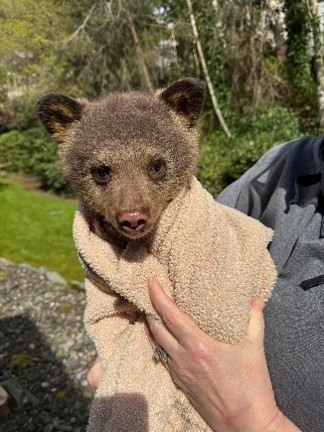
Radar on Day of Pick Up
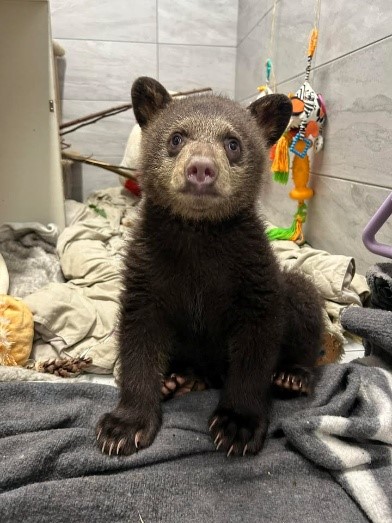
Radar – Happy and Thriving at Critter Care Wildlife Society in Langley, BC