

Blog
Mythbuster #3 – “Once a bear tastes human food source he /she becomes “food-conditioned,” and will never forage for wild food again.”

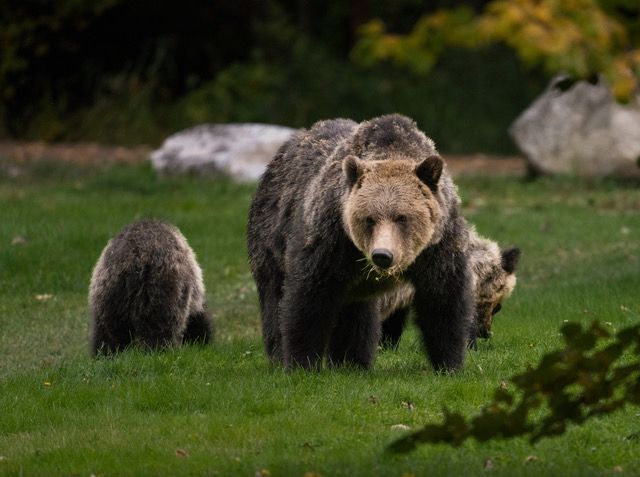
1) The term “food-conditioned” implies that once a bear has eaten human food source, he will behave unnaturally and will never go back to eating wild food. However, this is not backed up by science. A six-year-long study in Colorado demonstrated that bears that eat human food do not become addicted to it. They tend to return to wild places once the food becomes more plentiful. In addition, a more recent study in Florida confirms this. Not all bears observed consuming human food sources were ‘conditioned’ to the human food. Just like humans may prefer certain types of food sources when available, bears may also be attracted to human-sourced foods without becoming conditioned to the human-sourced food.
2) Bears adjust their movement and foraging behaviours based on safety and the availability of food sources. They are simply eating different foods in different locations, which is a natural behavior rather than a result of conditioning. (Many bears that are seen in urban interface areas are vulnerable bears: mothers with cubs, newly weaned cubs plus old, sick and or injured bears, all seeking safety from larger, more dominant bears or from fires, floods, etc.)
3) Yes, there is a likelihood of a bear returning to a human food source, even if chased away. But again, this behavior is not indicative of conditioning but rather a response to food availability and quality. Once human-sourced food sources are removed, bears move on.
Bears are opportunistic omnivores that adapt their foraging behaviors based on the availability of food sources in their environment and in which environments are most safe to do so. Instead of using the term “food-conditioning,” we should be discussing natural “foraging behaviour.”
Used by those that attempt to justify the killing of bears, logans like, “a fed bear is a dead bear”, misrepresent and oversimplify the true nature of bears. No bears should die because they have smelled and/or tasted food they have found in urban interface areas. There is no credible scientific evidence to suggest that when bears eat human sourced food, this makes them dangerous.
Successful coexistence depends on mutual trust and respect between bears and humans. Bears can be taught boundaries, with various methodologies already being used successfully by bear viewing guides and many other bear behavior specialists both in the wild and in urban interface areas. When human fear of bears is replaced with respect and knowledge about the true nature of bears, human behaviors become more predictable, which is essential in building trust with bears who in turn are more likely to respect the boundaries being set.